Learn more about detecting, navigating and discussing health misinformation
June 27 (Thu) | 6:30–8 p.m. PDT | Webinar Audience: all health professionals. Overview: Gain insight on how to help patients navigate health misinformation and get access to recommended resources to help clinicians and patients assess the reliability of health information. Our panellists are available to share their knowledge and experience — don’t miss this opportunity to get your questions answered.
“Ten years ago, Dr. Jeff Lichtman — a professor of molecular and cellular biology at Harvard University — received a small brain sample in his lab.
Although tiny, the 1 cubic millimeter of tissue was big enough to contain 57,000 cells, 230 millimeters of blood vessels and 150 million synapses.
‘It was less than a grain of rice, but we began to cut it and look at it, and it was really beautiful,’ he said. ‘But as we were accumulating the data, I realized that we just had way, way more than we could handle.’
Eventually, Lichtman and his team ended up with 1,400 terabytes of data from the sample — roughly the content of over 1 billion books. Now, after the lab team’s decade of close collaboration with scientists at Google, that data has turned into the most detailed map of a human brain sample ever created.”
Read more on Google and Harvard unveil most detailed ever map of human brain via CNN.
“Almost 600 people took the time to nominate family physicians from across the province – another record-breaking year! We heard stories of gratitude, compassion, kindness, advocacy, education and community engagement.
While they were all individual experiences, they all had one thing in common: unwavering support for patients and the specialty of family medicine.
Pictured on the right: Dr. Laura Phillips, an exemplary family physician based in Victoria, has, in the words of one her nominators, “lead by example and demonstrated outstanding leadership and advocacy skills while being a role model for all whom she interacts with.” Graduating from UBC in 2001 and completing her Family Medicine residency in Victoria, Dr. Phillips embarked on a journey of service that has positively impacted her patients, colleagues and communities.
Thank you to each and every nominator and to all the family physicians who continue to have a profound impact on the health and well-being of British Columbian residents. Please join us in celebrating this year’s BCCFP Award Recipients!“
Read more here on BC College of Family Physicians 2024 Award Recipients via BCCFP.
Kate Wahl, a PhD student in the UBC faculty of medicine’s department of obstetrics & gynaecology, wants to help Canadians navigate that decision. She’s developed It’s My Choice, Canada’s first interactive website aimed at helping people identify the abortion option that best fits their values and circumstances.
Hosted by the Society of Obstetricians and Gynaecologists of Canada (SOGC), the tool integrates the best available evidence on the two methods of abortion available in Canada: the abortion pill and abortion procedure. Users learn what to expect from each option, and after completing a secure and anonymous questionnaire, receive a personalized recommendation designed to support conversations with their healthcare provider.
Wahl developed It’s My Choice together with her UBC supervisor Dr. Sarah Munro, Dalhousie University’s Dr. Melissa Brooks, and a team of researchers, clinicians and patient partners. We spoke with her about the new resource.e
Read more here on UBC student launches ‘It’s My Choice’ to empower abortion care decisions via Faculty of Medicine.
This will be a 2 hour virtual workshop on the evening of Monday, June 10th. It is geared for physicians who have prior POCUS training and want a refresher on their POCUS teaching skills. There is no cost to register, and eligible faculty will be paid at the academic teaching rate for their time as well as a dinner per diem to thank you for your time. Please see attached invite for more details.
“Many Canadian physicians have a strong interest in working overseas and with low resource populations, but lack the skills and confidence to do so; the UBC R3 program in Global Health was created to provide physicians with the basic tools needed to provide effective health care services in international health and resource-limited settings. When Canadian physicians choose to work with populations in low and middle income countries, there are many people who benefit. Patients and communities benefit from a shared partnership towards improving quality and access to care, and physicians learn valuable skills when working in resource-limited settings, (such as improved utilization of resources, clinical care of patients with TB, HIV, tropical diseases, cross-cultural medicine & care for refugees, a better understanding of the physician’s role as an advocate and ethical global health research) which translates into improved care for British Columbians.
The curriculum will provide a comprehensive and flexible program, which will allow a resident to tailor his/her experience to individual interests, while ensuring a core body of knowledge and skills are achieved. The program will include 4 months of coursework and clinical training in Canada and a minimum of 2 months clinical work in an international resource-limited community. The international placement can be extended to 3 months.
The new program is divided into four core pillars: Coursework, Clinical work, Scholarly Activity, Advocacy/Knowledge Translation.
Residents will be required to complete mandatory and elective elements within each pillar and maintain a portfolio of activities, which will be reviewed and assessed throughout their enrolment in the R3 program.”
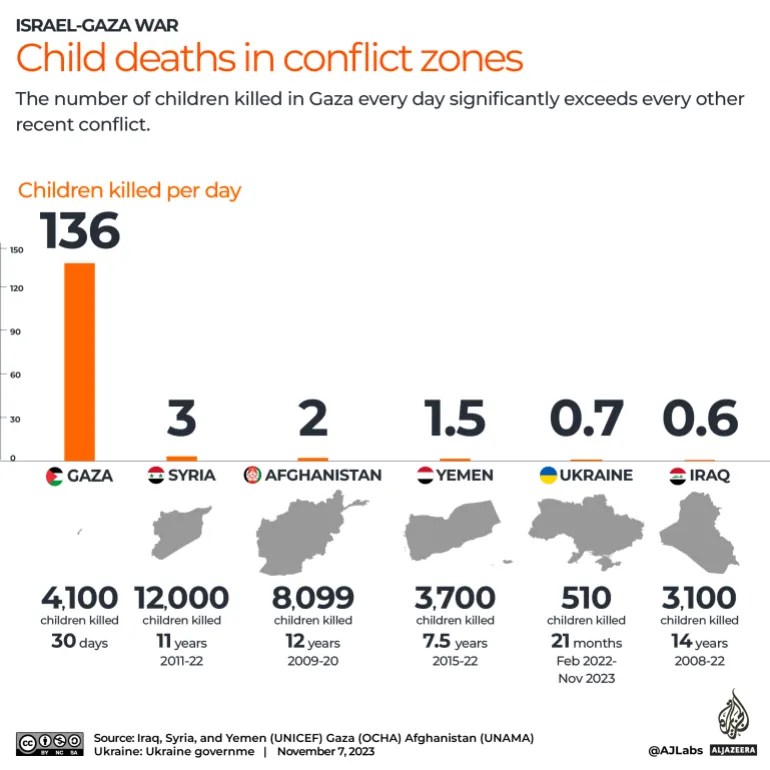
“Nearly 500 Quebec doctors have signed an open letter demanding their medical associations denounce the crisis in Gaza and call for an immediate ceasefire and access to humanitarian aid.
‘We, physicians in Quebec, are deeply concerned with the humanitarian catastrophe in Gaza that worsens each day,’ reads the letter, published Thursday morning. ‘One hundred and fifty eight days of devastation, 31,272 killed and 73,024 injured, 1.5 million refugees. Remaining silent in the face of suffering of this magnitude is contrary to our role as physicians and a forsaking of our shared humanity.’
Included among the signatories are Joanne Liu, former international president of Médecins Sans Frontières/Doctors Without Borders and a professor at McGill University’s School of Population and Global Health, and Amir Khadir, former Québec solidaire MNA for the Mercier riding and a specialist in infectious diseases.
The petition is calling on four provincial medical associations — the Collège des médecins du Québec, the Fédération des médecins omnipraticiens du Québec, the Fédération des Médecins spécialistes du Québec, and the Collège québécois des médecins de famille — to issue a statement demanding an immediate ceasefire, immediate access to drinkable water, an end to blockades preventing entry of medical supplies and the release of hostages on both sides of the conflict.
The idea for the open letter originated on Facebook, where some Quebec doctors involved in groups on the social media site voiced the distress they were feeling over the war. Last week, a few started their own Facebook page, titled ‘Quebec doctors against the genocide in Gaza,‘ that quickly drew more than 500 members.”
Read more on “Quebec doctors sign open letter demanding ceasefire in Gaza: Remaining silent in the face of suffering of this magnitude is contrary to our role as physicians” via The Gazette.
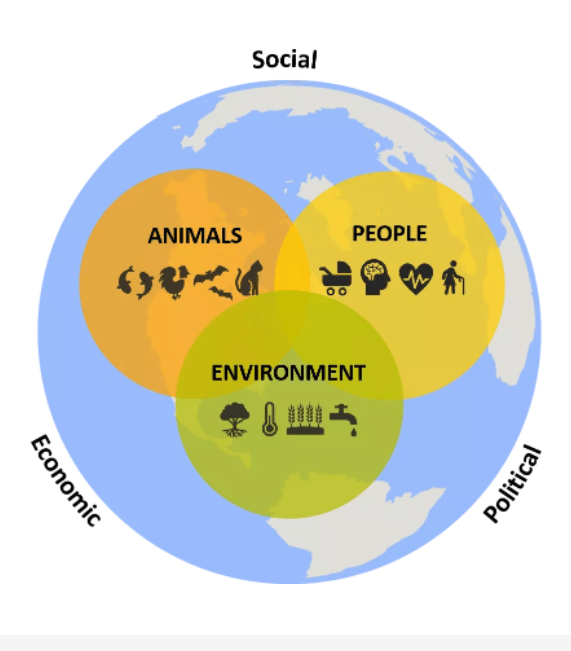
“The health of humans, animals, and ecosystems are closely interlinked. Changes in these relationships can increase the risk of new human and animal diseases developing and spreading. One Health is at the intersection of human health, animal health, and environmental health. The most commonly used definition shared by the US Centers for Disease Control and Prevention and the One Health Commission is: One Health is defined as a collaborative, multisectoral, and transdisciplinary approach—working at the local, regional, national, and global levels—with the goal of achieving optimal health outcomes recognizing the interconnection between people, animals, plants, and their shared environment.
The term One Health first came into usage after the SARS pandemic in 2003 and the spread of avian influenza, H5N1. The COVID-19 (SARS-CoV-2) pandemic has further demonstrated the close connection between humans, animals, and the shared environment. Through the One Health lens, public health initiatives will focus on surveillance and upstream interventions that provide benefits for the health of animal, human and ecosystems.”
Learn more about Canada’s One Health approach via ipac Canada.
Evidence from a variety of cross-sectional, longitudinal and empirical studies implicate smartphone and social media use in the increase in mental distress, self-injurious behaviour and suicidality among youth; there is a dose–response relationship, and the effects appear to be greatest among girls.
Social media can affect adolescents’ self-view and interpersonal relationships through social comparison and negative interactions, including cyberbullying; moreover, social media content often involves normalization and even promotion of self-harm and suicidality among youth.
High proportions of youth engage in heavy smartphone use and media multitasking, with resultant chronic sleep deprivation, and negative effects on cognitive control, academic performance and socioemotional functioning.
Clinicians can work collaboratively with youth and their families, using open, nonjudgmental and developmentally appropriate approaches to reduce potential harms from social media and smartphone use, including education and practical problem-solving.
There is a need for public awareness campaigns and social policy initiatives that promote nurturing home and school environments that foster resilience as youth navigate the challenges of adolescence in today’s world.”
More on Smartphones, social media use and youth mental health via CMAJ.


 Family Medicine Residency Site: Abbotsford-Mission