Malaria Vaccinations & Africa

“Côte d’Ivoire will become the first country to roll-out the new R21/Matrix-M™ vaccine with the first child vaccinated in Abidjan, marking a critical step and historic milestone in the global fight against malaria.

Every year 600,000 people die of malaria in Africa, according to the World Health Organization (WHO). Children under five years of age make up at least 80% of those deaths. Although the number of malaria-related deaths has fallen from 3,222 in 2017 to 1,316 in 2020 in Côte d’Ivoire, the mosquito-borne disease kills four people a day, mostly small children, and “remains the leading cause of medical consultations, according to the Ministry of Health.

R21/Matrix-M™ was co-developed by the University of Oxford and Serum Institute of India, leveraging Novavax’s Matrix-M™ adjuvant technology. In December 2023, the WHO granted R21/Matrix-M™ prequalification status, following a rigorous regulatory process and clinical assessment. Trials also demonstrated that the vaccine was well tolerated, with a good safety profile, with injection site pain and fever as the most frequent adverse events.”

Read more on Côte d’Ivoire makes history as first nation to deploy R21/Matrix-M™ Malaria Vaccine via Oxford News & Events.

Toxic Metals & Tampons

“’Despite this large potential for public health concern, very little research has been done to measure chemicals in tampons,’ said lead author Jenni A. Shearston, a postdoctoral scholar at the UC Berkeley School of Public Health and UC Berkeley’s Department of Environmental Science, Policy, & Management. ‘To our knowledge, this is the first paper to measure metals in tampons. Concerningly, we found concentrations of all metals we tested for, including toxic metals like arsenic and lead.’

Metals have been found to increase the risk of dementia, infertility, diabetes, and cancer. They can damage the liver, kidneys, and brain, as well as the cardiovascular, nervous, and endocrine systems. In addition, metals can harm maternal health and fetal development.

‘Although toxic metals are ubiquitous and we are exposed to low levels at any given time, our study clearly shows that metals are also present in menstrual products, and that women might be at higher risk for exposure using these products,’ said study co-author Kathrin Schilling, assistant professor at Columbia University Mailman School of Public Health.”

Read more on First study to measure toxic metals in tampons shows arsenic and lead, among other contaminants via Berkeley Public Health.

Tapping AI’s Strengths: Operating Room Safety

Dr Bibbins-Domingo: Let’s talk now about what AI is going to do for patients. We have our computers that we carry around with us in our phones and in our watches, and if we’re interested in more information about our health, those sensors are collecting data about us all the time. I’m a primary care clinician. My patients are bringing me that data all the time and they’re asking me to help make sense of that. So tell us what’s on the horizon and how might we think about these really wonderful ways in which these incredible sensors and other data collection tools will become better integrated into clinical care.

Dr Kheterpal: I think the most important thing that the modern sensors and wearables offer us is really understanding the patient’s daily lived experience. I think we can all agree that even the most conscientious clinician struggles to truly understand in that 15-minute primary care visit, where you see the patient every 6 months, when they say, “I’m feeling tired,” what does that actually mean? These symptoms that are coming to us in episodic moments, and we have episodic assessments of them, but they’re lived throughout the day and throughout the 6-month or 1-year period. And the beauty of the sensors we now have is that there’s potentially an objective way to get a sense of how that patient’s doing.

Read more on Tapping AI’s Strengths—From Operating Room Safety to Wearable Device Interpretation via JAMA.

Guarding Our Well-Being

“I’m struggling to stay in this world, because everything just touches me so deeply. I’m not doing this for attention. I’m doing this to be an inspiration and to show that I can be strong. I did things to myself to make pain go away, because I’d rather hurt myself then someone else. Haters are haters but please don’t hate, although I’m sure I’ll get them. I hope I can show you guys that everyone has a story, and everyone’s future will be bright one day, you just gotta pull through. I’m still here aren’t I ?” ~ Amanda Todd

Purpose: The purpose of this study was to understand the needs of youth and young adults, current gaps around safeguarding social media, and factors affecting adoption of data-driven auto-detection or software tools.

Methods: This qualitative study is the first step of a larger initiative that aims to use participatory action research and co-design principles to develop a digital tool that targets cyberbullying. Youth and young adults aged 16–21 years were recruited to participate in semistructured focus groups between March 2020 and November 2021. Thematic analysis was used to develop themes, with a member-checking process to validate the findings.

Results: Six focus groups were completed with 39 participants and five themes were generated from the analysis. Participants described the mental health impacts of cyberbullying on young people, the stigma associated with it, and the need for more mental health resources. They felt that additional efforts are needed to improve the school environment, school-based interventions, and training protocols to ensure that youth feel safe reporting cyberbullying. Most participants were open to using a digital solution but raised concerns around the trustworthiness of artificial intelligence and wanted it to be co-designed with young people, integrated across platforms, informed by data-driven decisions, and transparent with users.

Discussion: Youth and young adults are accepting of a low-risk digital cyberbullying solution as current interventions are not meeting their needs.

Read more on Digital Disconnection: A Qualitative Study of Youth and Young Adult Perspectives on Cyberbullying and the Adoption of Auto-Detection or Software Tools via Journal of Adolescent Health.

More on the Amanda Todd Legacy Story.

Guarding Our Well-Being: The Emotional Impact of Cyberbullying and Identity Theft via The University of British Columbia Information Technology.

Sleep, Bookreading, & Preschoolers

Young mother contemplating her sleeping child in candlelight
Albrecht Anker, 1875

Purpose

Healthy sleep is essential for the physical, cognitive, and social development of children. Several studies have reported the increase in digital media use in preschool children and its association with impaired sleep. However, there is relatively little evidence on the effects of book reading as a potentially safe alternative. The objective of this study, therefore, was to investigate whether sleep in children could benefit from book reading, and whether the negative effects of media use on sleep can be mitigated by substituting book reading for screen time.

Participants and Methods

We used longitudinal data from three consecutive waves of the SPATZ Health study, including children at the ages of 4 (n=581), 5 (n=508), and 6 (n=426) years. All data were collected by self-administered questionnaires. Parent-reported child sleep was assessed by the Children’s Sleep Habits Questionnaire.

Results

Across the three waves, screen-based media use increased and was associated with lower sleep quality. In contrast, the time spent with book reading decreased; however, book reading appeared to be beneficial for children’s sleep. Substitution models revealed that the theoretical substitution of an equal amount of book reading for 50% of the time spent with screen-based media benefits several domains of preschoolers’ sleep health, including parasomnias, sleep anxiety, daytime sleepiness, and sleep onset delay.

Conclusion

Besides implications for population-wide and individual prevention, book reading may also be incorporated as a useful intervention to improve sleep quality in children who are already affected by sleep problems. Given that book reading is perceived as a safe alternative, the presented evidence may suffice to support recommendations in this direction.

Read more on Substituting Book Reading for Screen Time Benefits Preschoolers’ Sleep Health: Results from the Ulm SPATZ Health Study via Nature and Science of Sleep.

AI & Personalized Cancer Treatment

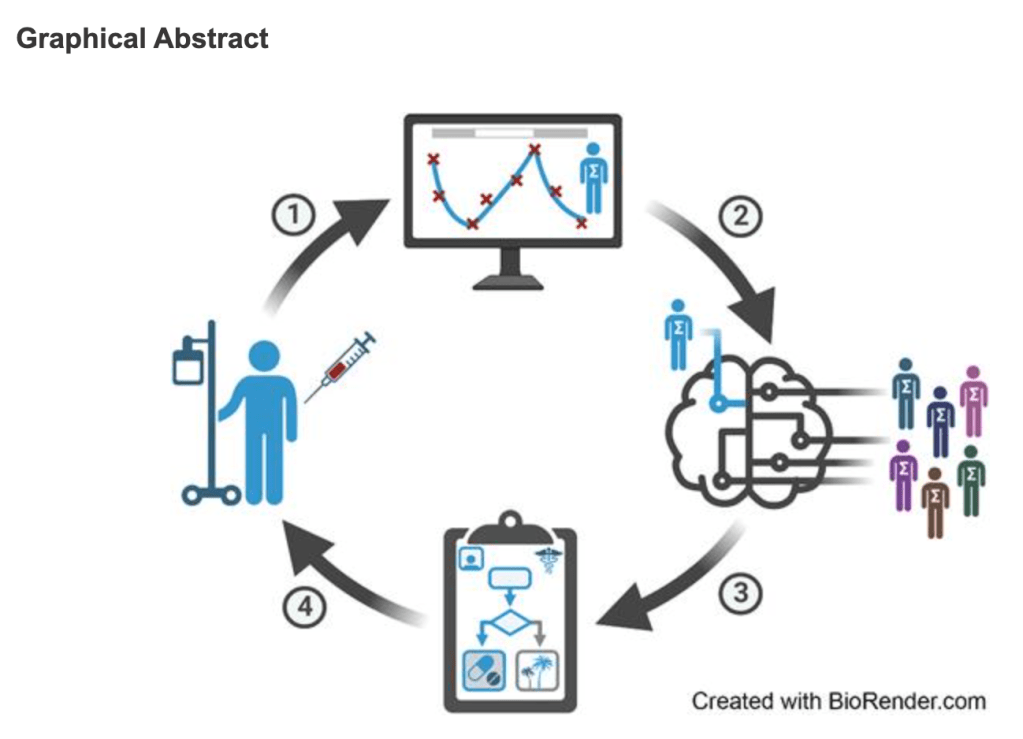
“In a new study published in Cancer Research, researchers from the University of Oxford and Moffitt Cancer Center in Florida introduce a novel framework that applies deep reinforcement learning, DRL, (a form of AI) to create adaptive therapy schedules for individual prostate cancer patients. The results indicate that the new adaptive approach could potentially double the time to relapse compared to MTD or non-personalised treatment breaks.”

Read more on Study demonstrates how AI can develop more personalised cancer treatment strategies via University of Oxford.

Fundamental Human Rights of Children

Child Soldier in the Ivory CoastGilbert G. Groud, 2007

“This article addresses the critical issue of violence against children, defined as a violation of their rights across interpersonal, community, societal, and global settings, encompassing both physical and psychological actions targeting them or their parents. Globally, WHO estimates that an unacceptably large number of children aged 2–17 years, experience physical, sexual, or emotional violence or neglect yearly. War stands out as a major contributor to the infringement of children’s fundamental human rights. Those in conflict zones undergo traumatic experiences, including the loss of family members, disruptions to social networks, displacement, and the denial of basic needs. The severe deprivation of essential resources and opportunities, coupled with the stress of warfare, poses a grave threat to the emotional and cognitive development of children, increasing the risk of physical and mental illnesses, disabilities, social problems, and intergenerational consequences. The article aims to draw attention to this issue and advocates for the development of appropriate academic and post-academic educational courses and training programs. This will better equip pediatricians and healthcare professionals to effectively combat violence against children in any context.”

Read more on War inflicts severe violations on the fundamental human rights of children via Global Pediatrics.