
“The internet has become an integral part of the modern lives of adolescents. This allows youth to easily access information and topics of interest online, including sexually explicit material or pornography. Pornography is commonly defined as professionally produced or user-generated sexually explicit pictures or videos intended to sexually arouse the viewer. Increased access to the internet and other online platforms has resulted in a rapid increase in the number of adolescents who encounter and consume pornographic content. As a result, adolescents’ exposure to pornography has been a great concern for parents, teachers and the general public.
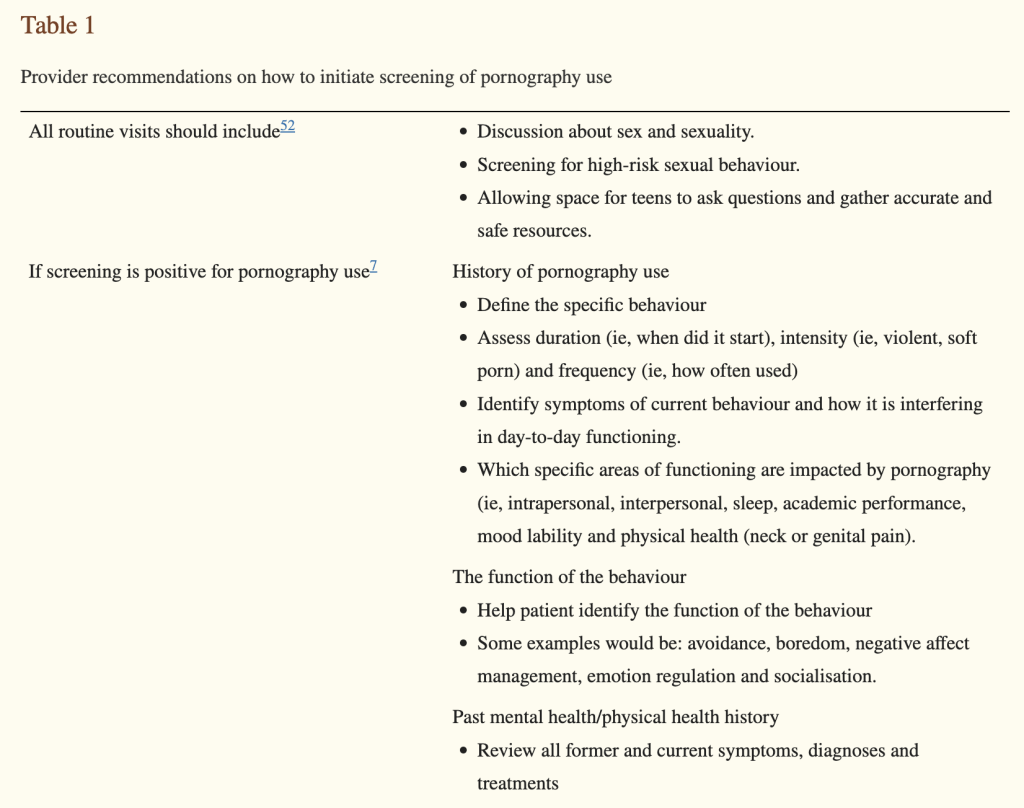
Pornography has the potential to impact adolescent development both negatively and positively. It is a greatly complex media, making it a particular concern for primary care providers (PCPs) and parents as they are often the first point of contact when adolescents experience any issues with well-being, including physical or mental health concerns. Having an unbiased understanding of the impact of pornography use on adolescent development lays the groundwork for healthcare providers to support adolescents in their sexual development and health. In this special communication, we seek to provide guidelines for medical providers to integrate routine screening and counselling of pornography use as a part of adolescent primary care and offer recommendations for how to facilitate conversations that may arise between youth and parents regarding the use.”
Read more on “Pornography use among adolescents and the role of primary care” via NIH.

 Family Medicine Residency Site: Abbotsford-Mission